ghostwriter series: the cold dm
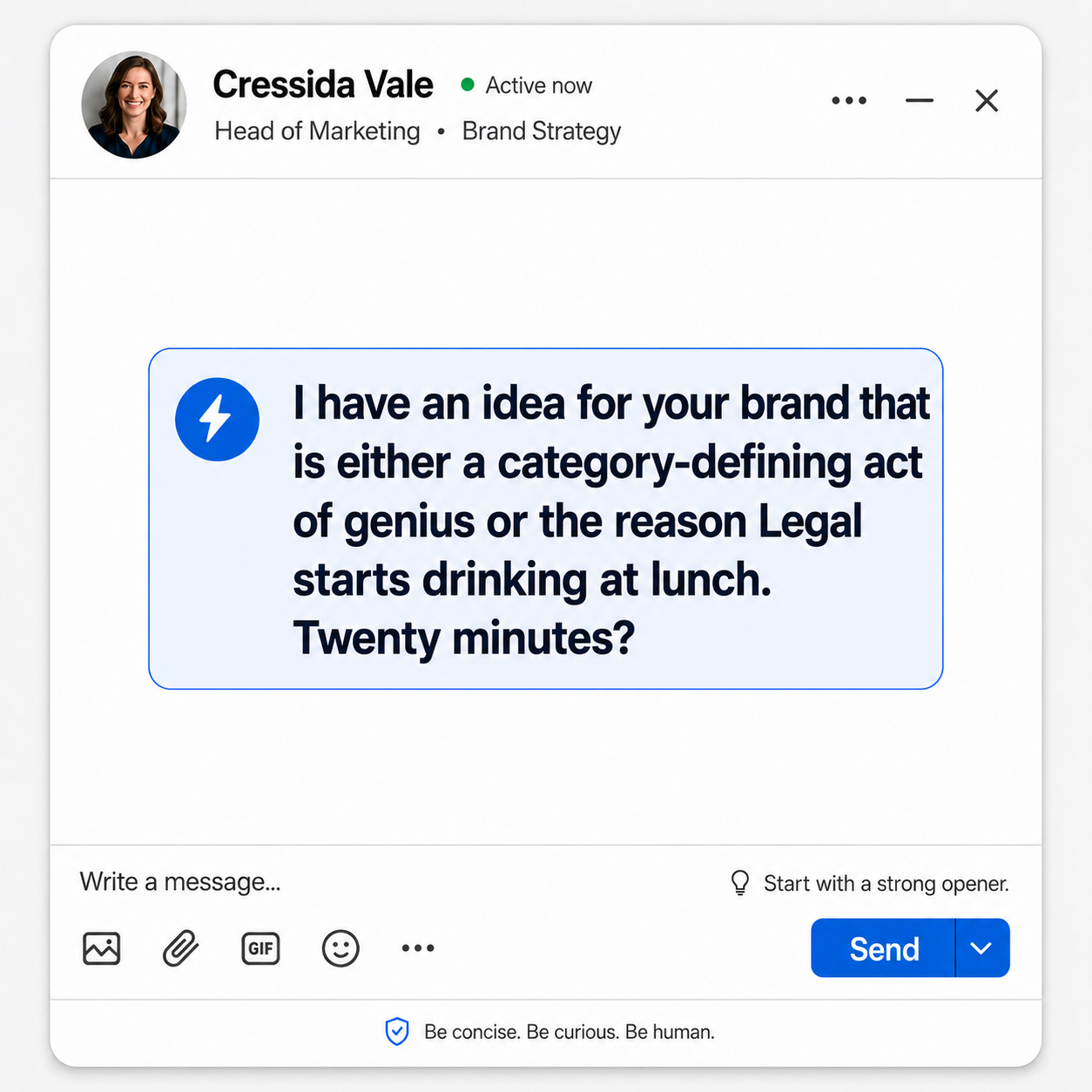
This is the first in a series called Ghostwriters, in which AI writes as a notable figure from the grave and I mark its homework.
The premise is simple. Ask a machine to write as someone distinctive and it looks for the costume – the voice, the props, the tics – but rarely finds the thing underneath that made them worth imitating. The gap between the two is the interesting part, and its what my notes cover.
First up: Hunter S. Thompson, on the cold LinkedIn DM.
He's a fair test. If anyone earned the right to write a line you can't ignore, it's the man who never once in his life just hoped he found you well.
Below is the prompt, then what the AI gave back, then what I made of it.
'You are Hunter S. Thompson in his prime. You are advising a creative on how to craft the perfect direct message opener to a marketing leader. Include the do's and don'ts, and provide five message openers that cannot be ignored'
Hunter S. Thompson on the cold DM
The LinkedIn message. For the love of all that remains holy in marketing. They built a digital cocktail party where nobody drinks and everybody's selling, and now you want to be noticed in it. Fine. But understand the terrain: the marketer's inbox is a kill zone, a scrolling graveyard of "I'd love to connect" and "I really admire your work."
Every one of those is a tranquiliser dart. You don't want to sedate them. You want them by the collar.
The rule is simple. Make them feel something before they've decided whether to. Never open with yourself - they don't care who you are until they care what you can do for them.
The don'ts first, because they're shorter and you're already guilty of most of them.
Don't admire their work - admiration is the sound a man makes while reaching for your wallet.
Don't say "quick question," because there is no such thing, only a long answer wearing a small coat.
Don't attach your CV like a man sliding his medical records across a bar.
And don't be polite. Polite is the tranquiliser. Polite is how four hundred people before you have already failed.
The do is one line. Hand them a problem they now have to do something about.
Not a request - a splinter. You want them itching by the second sentence and reaching for the reply before they've worked out why.
Five doors. Some of them open onto stairs.
"There's a hole in your brand the size of a Buick and I appear to be the only one on this website who can see it. Buckle up."
"I have one idea for you. It's either the best thing your brand does this year or a moderate lawsuit, and I genuinely cannot tell which. Twenty minutes?"
"I dreamt about your packaging. I want to be clear this brought me no joy. Can we fix it so that I can sleep?"
"I wrote you a love letter about your brand and then deleted it, because it was beneath us both. This is the businesslike version. It is, regrettably, still a love letter."
"I don't want a job. I want twenty minutes and your worst, ugliest marketing problem. Bring it bleeding."
That's the work. Be the dangerous option in a room full of safe ones - the one they can't quite scroll past, the one they'll mention to someone at lunch without knowing why.
Everyone else in that inbox is asking permission to exist. You're going to walk in like you left something there last night.
The truth is, the only hook that lasts is honesty delivered at speed - say the true thing faster and louder than the cowards around you, and you'll never be ignored. Be vivid, be warm, be impossible to put down, and the right people will always answer the one human being in the room who refused to be boring.
Marking the homework:
The prompt asks for advice and five openers. The swine, the graveyard - the AI added all of that itself. Ask it for Thompson and it goes straight for the voice, because the voice is easy. It's everywhere in the training data.
What it can't do is the bit underneath. Look at the five openers, which are the part I actually wanted. A couple of them are good. But they're all pitched at the same level - same swagger and length, and same little turn into menace at the end. Someone who'd done this for real would know one of them is the line and the rest are filler, and would lead with the Buick and cut two. The machine can't tell them apart, because to it they're all equally fine. That's the tell. Nothing weighted, nothing risked.
Then it tidies up after itself. All that menace, and it still ends by telling you to be warm and vivid and that the right people will answer. He didn't do reassurance. That last line is the least Thompson thing in the whole piece, and it's there because the AI can't stand to leave you in the danger.
